


If you have ever looked at a tire sidewall and wondered what all those letters and numbers mean, you are not alone. Knowing how to read tire date codes can help you determine when a tire was manufactured and provide another useful detail to consider when checking your tires.
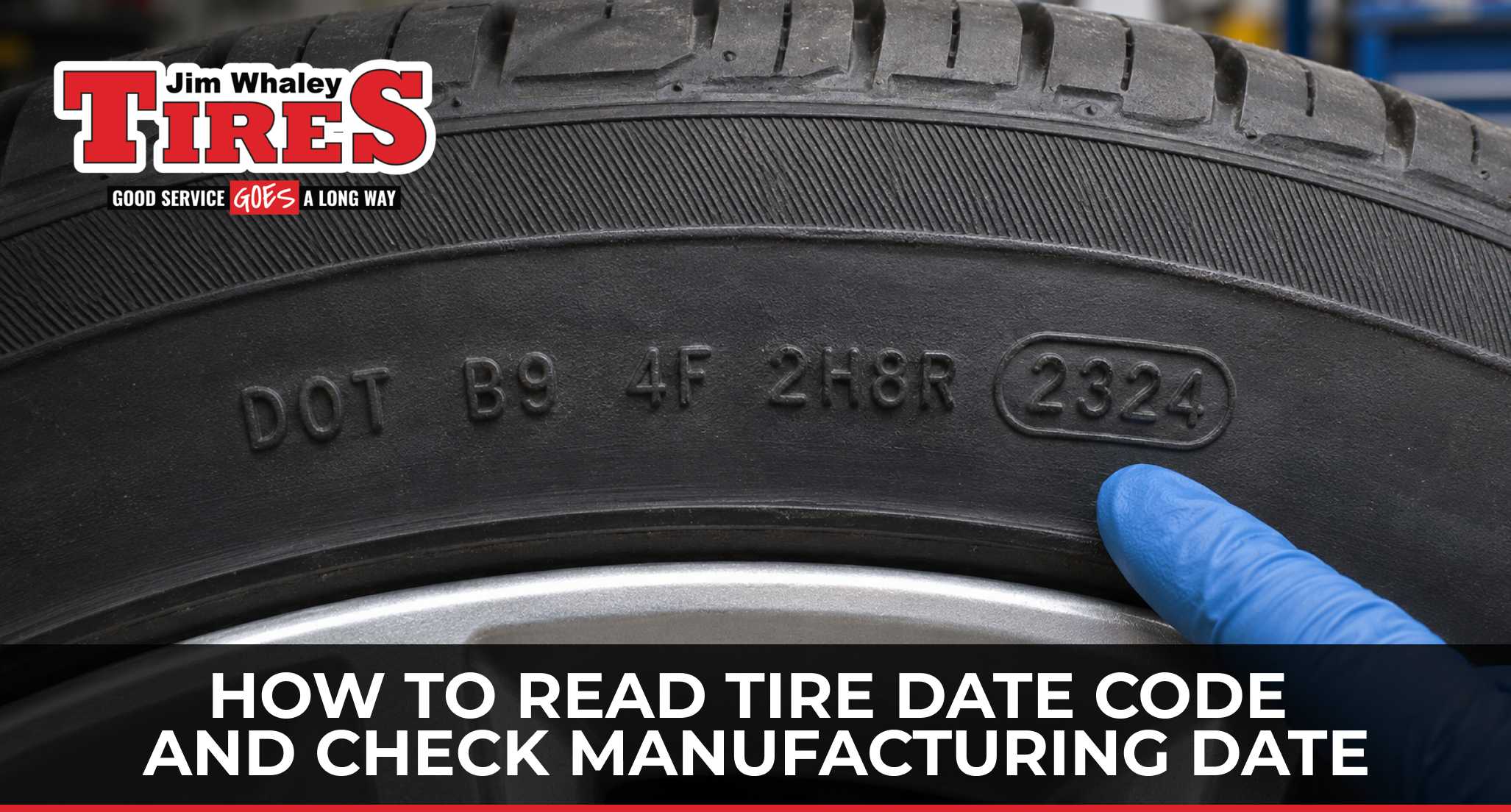
The date is found within the DOT marking on the sidewall. For tires manufactured since 2000, the final four digits identify the production week and year. For example, a code ending in 2424 means the tire was made during the 24th week of 2024.
For drivers in Enterprise, including those near Boll Weevil Circle, checking the date can be especially useful when buying replacement tires, inspecting a vehicle you recently purchased, or deciding whether an older spare still deserves a place in your vehicle.
This guide explains where to look, how to decode the numbers, what they mean for your tires, and when it makes sense to have a professional inspection.
TL;DR – How to Read Tire Date Code
- Find the DOT marking – Look along the tire sidewall for the letters DOT followed by a series of letters and numbers.
- Read the final four digits – On tires made since 2000, the last four digits show the production week and year.
- Use the week and year together – A code such as 1523 means the tire was manufactured during the 15th week of 2023.
- Check the entire tire – The date is useful, but tread depth, cracks, damage, inflation, and overall condition also matter.
- Get older tires inspected – Age alone does not automatically determine whether a tire can remain in service, but older rubber deserves closer attention.
How to Read Tire Date Code on the Sidewall
The easiest way to understand your tire’s production date is to start with the sidewall. The information may look complicated at first, but you only need to identify one specific group of numbers.
Find the DOT marking
Look around the sidewall for DOT, which identifies the Tire Identification Number required for tires sold in the United States. The code contains information used to identify the tire, including manufacturing details.
The full code may be easier to find on one side of the tire than the other. Some tires have the complete identification number on one sidewall while the opposite side displays only a partial version.
If you cannot see the full number from outside the vehicle, do not assume it is missing. You may need to check the inner sidewall.
Look at the final four digits
Once you locate the full DOT marking, move to the final four digits. These are the numbers that tell you when the tire was manufactured on tires made since 2000.
For example:
DOT XXXX XXXX 2424
The final four digits are 2424.
- 24 = 24th week of the year
- 24 = 2024
- 2424 = manufactured during the 24th week of 2024
This simple WWYY format is the key to understanding the DOT tire code without decoding every character on the sidewall.
Use good lighting when checking
Sidewall markings are molded into the rubber and can become difficult to see when the tire is dirty, worn, or positioned in poor lighting.
A flashlight can make a big difference. Wiping away dirt or road grime can also make the numbers easier to distinguish.
If you are checking a tire on the front axle, turning the steering wheel can sometimes give you a better view of the sidewall. For a complete inspection of an inner-facing sidewall, a tire professional may have a much easier time accessing the marking.
Once you know where the date appears, checking several tires takes only a few minutes. That can be worthwhile before a long trip or when evaluating a used vehicle.
What Does the Tire Date Code Mean?
The final four digits represent the week and year of production. The first two digits identify the production week, while the final two digits identify the year.
Example 1 1225
A tire ending in 1225 was manufactured during the 12th week of 2025.
Example 2 3623
A tire ending in 3623 was manufactured during the 36th week of 2023.
Example 3 4721
A tire ending in 4721 was manufactured during the 47th week of 2021.
The numbers identify the production period rather than the date the tire was installed on your vehicle. A tire could sit in inventory for a period of time before being sold and installed.
That distinction matters when evaluating tires on a newly purchased vehicle or a replacement set. The production date tells you when the tire itself was manufactured.
HONEST SERVICE.
REAL SAVINGS.
CLAIM YOURS AND BOOK
AN APPOINTMENT
VIEW ALL COUPONS

What Is the DOT Tire Code?
The DOT tire code is the larger identification marking molded into the tire sidewall. It contains more information than the manufacturing date alone.
Depending on the tire, the characters can identify manufacturing and product information, while the final four digits provide the production week and year for tires manufactured since 2000.
What to look for on the sidewall
When checking your tires, pay attention to these details:
- DOT marking – This is where you begin looking for the Tire Identification Number.
- Manufacturer information – Characters within the identification number can relate to the manufacturing facility and tire specifications.
- Final four digits – These provide the production week and year on modern tires.
- Tire size – The size marking is separate from the production date and helps identify whether the tire is appropriate for your vehicle.
- Other sidewall markings – Load, speed, construction, and service information can also appear around the sidewall.
Understanding the DOT tire code helps you distinguish the production date from other numbers that may look similar.
This is particularly useful when shopping for tires because a sidewall can contain a lot of information in a relatively small space.
How to Check Tire Age After Reading the Date
Once you know the production week and year, you can determine approximately how long the tire has been in existence. That gives you useful context during a tire inspection, but it should be considered alongside tread and physical condition.
For example, a tire manufactured in 2020 is older today than a tire manufactured in 2024. The difference may matter when comparing two otherwise similar sets.
Look for these signs of aging
- Cracks in the sidewall – Small cracks can develop as rubber ages and is exposed to environmental conditions. Cracking deserves attention, particularly when it becomes deeper or more widespread.
- Tread condition – Adequate tread depth remains important for traction, braking, and water evacuation. A tire can have plenty of tread while still requiring an inspection for age-related damage.
- Bulges or bubbles – A bulge can indicate internal structural damage and should be inspected promptly rather than monitored casually.
- Uneven wear – Wear concentrated on one edge or in patches can point to alignment, suspension, inflation, or other vehicle issues.
- Hard or brittle rubber – Changes in the rubber’s appearance or feel can be another reason to have the tire evaluated.
Checking tire age gives you one part of the picture. A professional inspection can help determine whether the tire’s condition matches its apparent age.
For drivers around Boll Weevil Circle, this is particularly useful before a highway trip. Enterprise drivers may put substantial miles on their vehicles traveling between communities, work sites, and surrounding Alabama towns.
Do Tires Expire?
There is no single calendar date that automatically makes every tire unsafe. Tire serviceability depends on age, condition, use, storage, heat exposure, damage, tread wear, and other factors.
Michelin recommends retiring tires 10 years after their production date as a precaution, regardless of their external appearance. Other tire and service organizations may recommend earlier replacement or inspection based on age and condition.
Why older tires deserve attention
- Rubber changes over time – Tires are made from rubber compounds that can gradually deteriorate through exposure to heat, oxygen, sunlight, and environmental conditions.
- Heat matters – Regular exposure to high temperatures can contribute to aging, making tire condition particularly important in warm climates.
- Storage affects tires – A tire that spent years stored properly can experience different conditions from one that spent those years mounted and exposed to regular driving.
- Age can hide behind good tread – Plenty of tread does not automatically mean the entire tire is in excellent condition.
- Inspection helps put age into context – A technician can look at the sidewall, tread, wear pattern, inflation condition, and other factors before recommending replacement.
The important point is that tire expiration should not be treated as a single number printed on the sidewall. The production date helps establish age, while an inspection helps determine the tire’s current condition.
If you are unsure about a tire’s expiration date, a tire professional can help you determine whether age, condition, or another factor should influence your replacement decision.
What About Tires Made Before 2000?
Older tires use a different date-code system. Before 2000, tire manufacturers used a three-digit date code rather than the four-digit format used on modern tires. The first two digits represented the production week, while the final digit represented the year within the decade.
For example, a three-digit code such as 439 could indicate the 43rd week of a year ending in 9. Because the old system could not clearly distinguish the decade, interpreting these codes can be more complicated.
If you encounter a very old tire with a three-digit date code, professional evaluation and replacement planning should take priority. A tire produced before 2000 would already be decades old.
Does Tire Age Matter If the Tread Looks Good?
Yes, tire age is worth considering even when the tread appears healthy. Tread depth is an important measurement, but it does not tell you everything about the condition of the rubber and internal structure.
Michelin notes that tire age alone does not determine serviceability and that tread wear and overall condition also matter.
A good tire check should consider several things:
- Tread depth – Check whether the tread is approaching the legal or manufacturer-recommended limit.
- Wear pattern – Look for uneven wear that could indicate alignment, suspension, or inflation problems.
- Sidewall condition – Inspect for cuts, cracking, bulges, or other visible damage.
- Inflation pressure – Use the vehicle manufacturer’s recommended pressure rather than the maximum pressure molded into the tire sidewall.
- Production date – Compare the manufacturing date with the tire’s current age and overall condition.
If the tire looks acceptable but the production date indicates that it is getting older, consider having it professionally inspected rather than relying on appearance alone.
When Should You Check Your Tire Date Code?
You do not need to check the date every time you start your vehicle. However, there are several situations when it makes sense to look.
- Before buying used tires – Check the production date before purchasing a used tire so you know how old it is.
- When buying a used vehicle – A vehicle can have relatively low mileage while still carrying older tires.
- Before a long road trip – A quick tire inspection can identify aging, damage, or uneven wear before you spend hours on the highway.
- When replacing one tire – Checking the dates of the existing tires can help you understand how the replacement fits into the rest of the set.
- When inspecting a spare – Spare tires can age while spending most of their lives out of sight.
These simple checks can help you make better decisions about tire maintenance and replacement. They are especially useful for first-time car owners who may be unfamiliar with the information molded into a tire’s sidewall.
Check Tire Age and Condition With Jim Whaley Tires
Learning how to read tire date codes gives you a simple way to find out when your tires were manufactured. The final four digits of the DOT marking indicate the production week and year on modern tires, providing useful information when evaluating a tire’s condition and replacement needs.
For drivers in Enterprise, Dothan, Ozark, Eufaula, Troy, Marianna, and surrounding communities, a date-code check is a practical part of routine tire care. If you are unsure about an older tire, visible cracking, uneven wear, or another concern, Jim Whaley Tires can help you evaluate the tire and explain your options.
If you are near Boll Weevil Circle in Enterprise and have questions about your tires, consider having them inspected by a professional. Jim Whaley Tires serves drivers across Alabama and Florida with tire and automotive services, including tire inspections and tire-related service.
You can schedule an appointment online at Jim Whaley Tires and get help determining whether your tires are ready for more driving or should be replaced.