


If your vehicle pulls slightly to one side, your steering wheel is crooked, or your tires are wearing unevenly, you may be wondering about the cost of wheel alignment on West Main St. before bringing your car in. That is a smart question because alignment prices can vary based on your vehicle, the type of alignment required, and whether other suspension or steering problems are found.
For drivers searching for the cost of wheel alignment on West Main St., the most useful answer comes with some context. A typical alignment may fall within a broad market range, but your actual price depends on the vehicle and service needed. Current U.S. estimates range from $60 to $200 for standard alignments, while Dothan-specific estimates also vary by vehicle and provider.
This guide explains what can affect your bill, how to recognize an alignment problem, when you should have your vehicle checked, and what to expect from a local alignment service.
TL;DR – Wheel Alignment Cost on West Main St.
- Expect the price to vary – The final cost depends on your vehicle, alignment type, condition of the suspension, and adjustments required.
- Ask about the exact service – A front-end alignment and a four-wheel alignment are different services, so make sure you know what the estimate includes.
- Watch your tires – Uneven tread wear can provide an early clue that your wheels are not sitting at the correct angles.
- Pay attention after impacts – A pothole, curb strike, or hard road impact can change wheel alignment even when the vehicle still feels mostly normal.
- Get a professional measurement – A visual check can raise a concern, but alignment equipment provides the measurements needed for accurate adjustments.
The right approach is to have the vehicle inspected when symptoms appear rather than relying on a generic price or mileage rule. That can help you avoid paying for a service your vehicle does not need while also catching problems before they damage a good set of tires.
What Does Wheel Alignment Do?
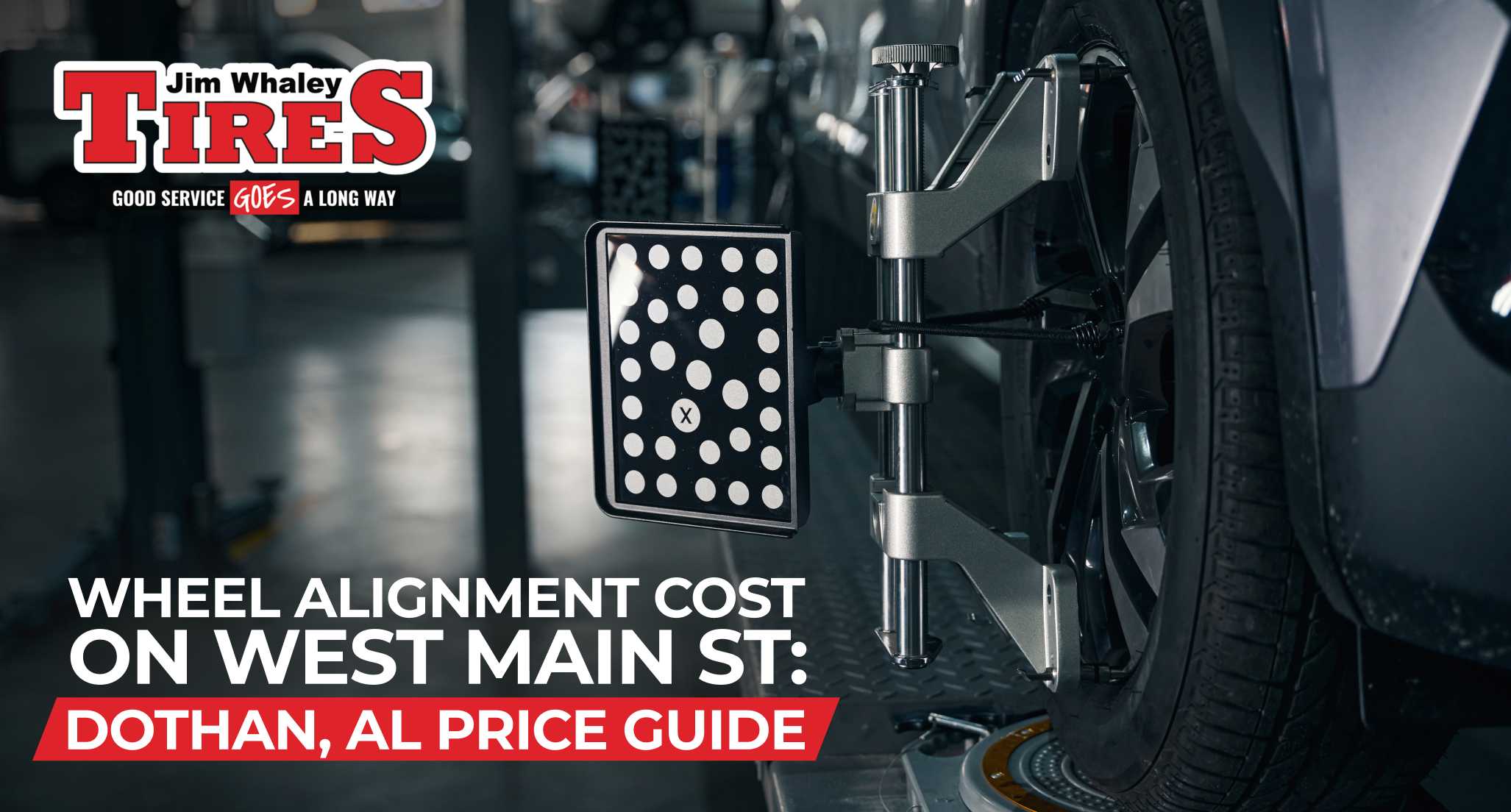
Wheel alignment involves measuring and adjusting the angles of the wheels and suspension so they meet the manufacturer’s specifications. The primary alignment angles technicians work with include camber, caster, and toe.
These measurements affect how your vehicle tracks down the road and how the tires contact the pavement. When the angles move outside their proper range, the vehicle may pull, the steering wheel may sit off-center, or the tires may begin wearing faster on one edge.
Why proper alignment matters
- Even tire wear – Correct alignment helps the tread contact the road more evenly. That matters because replacing tires prematurely can cost far more than correcting a relatively small alignment problem.
- Straighter tracking – A properly aligned vehicle should track predictably when you are driving on a reasonably level road. Constantly correcting the steering can become tiring, especially during longer trips.
- Better steering response – Alignment affects how the vehicle responds when you turn the wheel. Correct angles help the steering feel more consistent and predictable.
- Less suspension strain – Alignment problems can be connected to worn steering or suspension components. Finding the underlying issue can help prevent continued stress on related parts.
- Better tire investment – New tires perform best when the vehicle’s alignment is within specification. Checking alignment when tire problems appear can help protect the money you have already spent on your tires.
Proper alignment is, therefore a tire-care issue as well as a handling issue. If your vehicle has recently had new tires installed or experienced a significant road impact, an alignment check can be a practical way to protect your investment.
How Much Does Wheel Alignment Cost on West Main St.
There is no single price that applies to every vehicle. Current 2026 U.S. guides commonly list standard two-wheel alignment at $50 to $100 and four-wheel alignment at $100 to $200, although actual local pricing may fall outside those ranges.
For Dothan drivers, published estimates also show that prices can vary substantially. One current Dothan estimate lists a range from $32 to $202 with an average of $117, while Kelley Blue Book’s vehicle-specific estimate for a 2019 Toyota Prius near ZIP 36301 shows $113 to $166. These figures demonstrate why your vehicle information matters when requesting a quote.
What can change the price
- Vehicle type – Cars, SUVs, pickups, and specialty vehicles can require different procedures and adjustment times. Larger or modified vehicles may require additional work.
- Alignment type – Some vehicles are designed around front-end adjustments, while many modern vehicles require measurements involving all four wheels. Ask which service your vehicle actually needs.
- Suspension condition – A technician may discover worn tie rods, ball joints, bushings, or other components during the inspection. Alignment adjustments may not hold properly when related components are damaged or excessively worn.
- Adjustment difficulty – Rust, seized adjustment points, unusual suspension configurations, or aftermarket modifications can make the job more involved.
- Shop and equipment – Labor rates and equipment differ among independent shops, tire centers, and dealerships. A current 2026 comparison shows substantial differences between shop categories.
When comparing prices, ask what is included. A lower advertised price may represent an inspection or a limited service rather than the complete adjustment your vehicle requires.
4 Wheel Alignment Cost and What You Should Know
The 4-wheel alignment cost is often higher than a basic front-end alignment because the technician measures and adjusts alignment angles involving all four wheels when the vehicle’s design permits those adjustments.
Modern vehicles frequently use suspension systems in which rear-wheel alignment affects the vehicle’s overall tracking. That makes it important to determine the correct procedure for your particular car, truck, or SUV rather than automatically choosing the cheapest alignment option.
When four-wheel alignment may make sense
- Modern independent suspension – Many newer vehicles use suspension designs in which rear-wheel geometry affects overall vehicle tracking.
- Uneven rear tire wear – Wear patterns on the rear tires can provide an important clue that warrants investigation.
- Steering that feels off: A vehicle that does not track correctly may require a complete alignment check.
- After suspension work – Replacing or removing steering and suspension components can change alignment angles.
- After a significant impact – Potholes, curbs, and collisions can affect multiple wheels or suspension components.
The best service is the one specified by the vehicle’s design and the technician’s measurements. Paying for a four-wheel procedure when your vehicle does not require it adds unnecessary cost, while choosing an insufficient service can leave a problem unresolved.
HONEST SERVICE.
REAL SAVINGS.
CLAIM YOURS AND BOOK
AN APPOINTMENT
VIEW ALL COUPONS
What Are the Signs of Wheel Misalignment?
Knowing the signs of wheel misalignment can help you decide when an inspection is worthwhile. Some symptoms are easy to notice, while others first appear as subtle changes in tire wear.
A vehicle can also have an alignment problem without producing a dramatic steering symptom. That is why regularly checking your tires is important.
Common warning signs
- Vehicle pulls left or right – If your car consistently drifts toward one side on a reasonably level road, alignment may be one possible cause. Tire pressure, road crown, and suspension problems can also affect tracking, so a professional inspection is the better way to identify the cause.
- Steering wheel sits crooked – If you are traveling straight but the steering wheel is noticeably tilted, the alignment should be checked.
- Uneven tire wear – Look for one shoulder of the tread wearing faster than the opposite side. Feathering or unusual tread patterns can also provide useful clues.
- Steering feels unusual – Changes in steering response or a vehicle that feels less stable through turns deserve attention.
- Vehicle recently hit a pothole – A strong impact can affect alignment or damage a suspension component. Even when the car appears to drive normally afterward, an inspection can provide peace of mind.
- New tires wear unusually quickly – If a relatively new tire develops a strange wear pattern, alignment should be considered along with tire pressure, rotation history, and suspension condition.
The important point is that these symptoms can have several causes. A technician should measure the vehicle rather than assuming every steering or tire issue is automatically an alignment problem.
When Should You Get a Wheel Alignment?
There is no universal mileage interval that guarantees every vehicle needs an alignment. Alignment can change because of road impacts, suspension repairs, worn components, or other vehicle-specific conditions.
Some shops recommend periodic checks, while other guidance emphasizes having alignment inspected when symptoms or relevant repair events occur. The right approach depends on your vehicle and driving conditions.
Good times to have alignment checked
- After hitting a pothole – A hard impact can move suspension components or damage a wheel and tire.
- After hitting a curb – Even a low-speed curb impact can change wheel geometry.
- After suspension repairs – Components such as control arms, tie rods, or other steering and suspension parts can affect alignment when replaced.
- When installing tires – New tires provide a good opportunity to check existing wear patterns and confirm that the vehicle is ready to protect the new tread.
- When tire wear looks abnormal – Uneven wear is one of the clearest reasons to have the vehicle evaluated.
- When steering behavior changes – A new pulling sensation or off-center steering wheel deserves attention.
A useful habit is to look at your tires whenever you check their air pressure. That quick visual inspection can catch unusual wear before it becomes obvious from behind the wheel.
What Happens During a Wheel Alignment Service?
A professional alignment begins with measurements. The technician uses alignment equipment to determine how the wheels compare with the manufacturer’s specifications.
The process can vary by vehicle, but the goal remains the same: identify alignment angles that are outside specification and make the appropriate adjustments when the vehicle’s design allows them.
What to expect
- Vehicle inspection – The technician checks the tires, steering, and suspension for conditions that could affect the alignment.
- Alignment measurements – Specialized equipment measures the vehicle’s wheel angles.
- Comparison with specifications – The measurements are compared with the vehicle’s specifications.
- Adjustments: Where available, the technician corrects the affected angles.
- Final measurement – The vehicle can be measured again to verify the results.
Some modern vehicles may also feature advanced driver-assistance systems that require additional consideration following certain repairs or alignment procedures. The exact requirements depend on the vehicle manufacturer and system.
Protect Your Tires With Jim Whaley
Understanding the wheel alignment cost on West Main St. can make it easier to plan your vehicle maintenance, but the price should always be considered alongside the condition of your tires, steering, and suspension. Proper alignment can help your vehicle track properly and reduce the risk of premature tire wear.
If you are seeing signs of wheel misalignment, have recently hit a pothole or curb, or simply want your vehicle checked before a long trip, a professional inspection can give you a clearer answer. Jim Whaley Tires has served drivers since 1986 and offers tire and auto services at its West Main Street location in Dothan.
If you are ready to find out what your vehicle actually needs, schedule an appointment with Jim Whaley Tires. The West Main Street location is at 4143 W Main St, Dothan, AL 36305, with service available Monday through Friday from 7:30 AM to 6:00 PM and Saturday from 7:30 AM to 2:00 PM.
Schedule an appointment with Jim Whaley Tires