


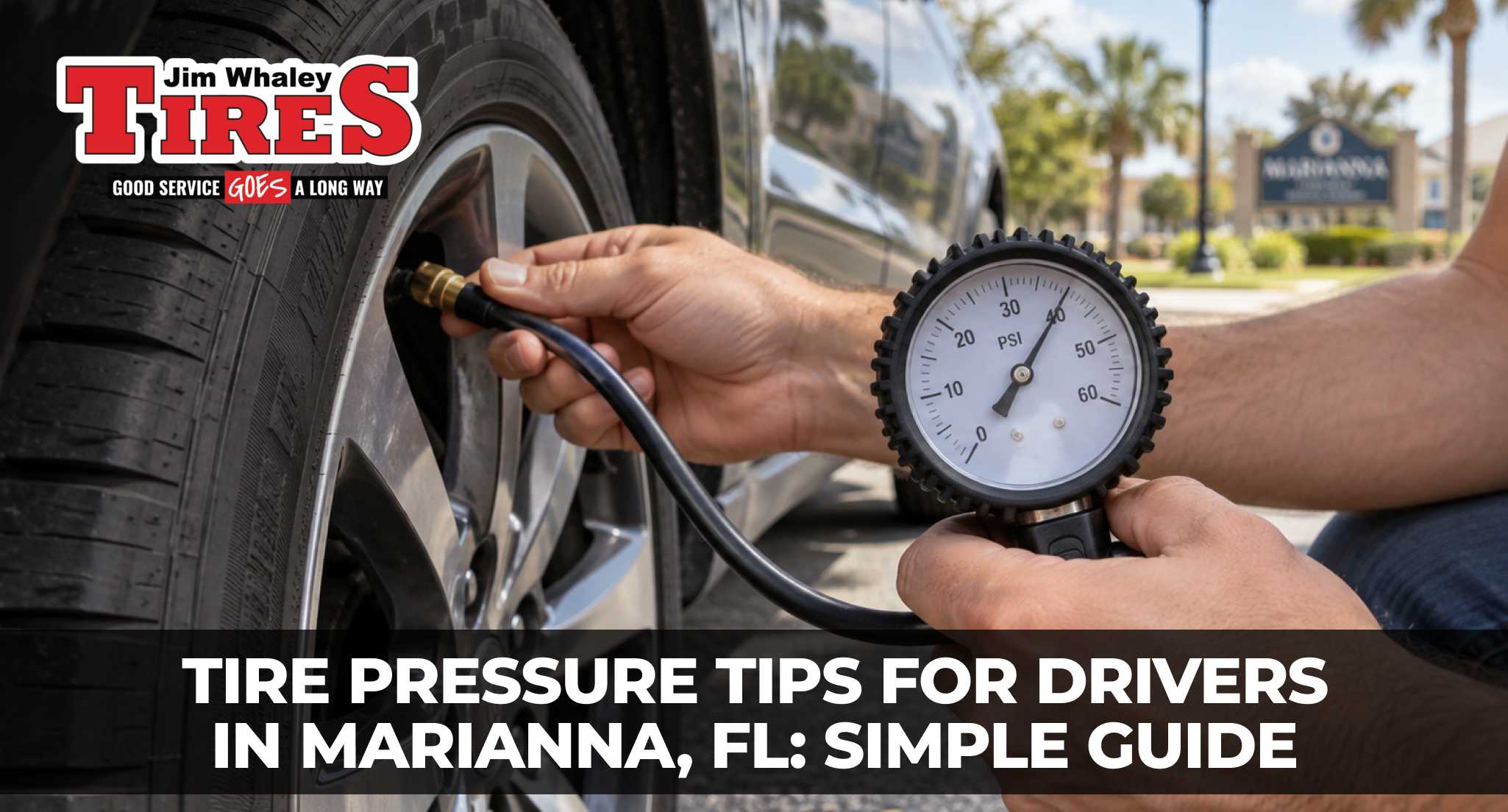
Maintaining the right tire pressure is one of the simplest ways to take better care of your vehicle. Yet it is easy to overlook when you are busy with work, errands, school, or a long drive across Jackson County. These tire pressure tips for drivers in Marianna, FL can help local car owners, SUV drivers, and first-time vehicle owners build a simple routine that protects their tires and supports safer handling.
Tire pressure affects traction, braking, tread wear, ride quality, and fuel economy. The National Highway Traffic Safety Administration recommends checking all tires, including the spare, at least once a month when they are cold.
If you drive around Marianna, travel US-90, or head toward I-10, a few minutes spent checking your tires can give you more confidence before you get behind the wheel.
TL;DR – Tire Pressure Tips for Drivers in Marianna, FL at a Glance
Here is the quick version of the most important advice. Keep these points in mind, whether you drive a small sedan, family SUV, pickup truck, or another everyday vehicle.
- Use the vehicle’s recommended PSI – Find the correct pressure on the driver’s door placard or in the owner’s manual. The number printed on the tire sidewall is generally the tire’s maximum pressure, not the recommended operating pressure for your vehicle.
- Check tires when they are cold – Measure pressure before driving or after the vehicle has been parked for several hours. Heat from driving raises tire pressure and can make a reading appear higher than the cold specification.
- Check all four tires – Do not assume that one low tire means the others are fine. Check each tire and inspect the spare if your vehicle has one.
- Pay attention to TPMS – A tire pressure warning can indicate significant underinflation. Check the tires rather than simply resetting the warning light and continuing to drive.
- Look for signs of a leak – A tire that repeatedly loses air may have a puncture, valve problem, wheel issue, or other source of pressure loss that needs professional attention.
Why Tire Pressure Matters for Marianna Drivers
The correct pressure helps your tires maintain the contact with the road they were designed to provide. When pressure is too low or too high, the way your vehicle responds can change.
For drivers in Marianna, that matters during everyday trips as well as longer drives through Florida and neighboring Alabama communities.
What happens when tires are underinflated
Underinflated tires can flex excessively as they roll. That added flex can create heat and contribute to faster or uneven wear.
Low pressure can also affect steering response and fuel economy. NHTSA identifies proper inflation as one of the most important parts of tire maintenance because it affects safety, tire durability, and fuel consumption.
What happens when tires are overinflated
Too much pressure can reduce the tire’s ability to maintain the intended contact patch with the road. It can also contribute to premature center tread wear and a firmer ride.
That does not mean a higher number is automatically better. Your vehicle manufacturer selected a recommended pressure based on the vehicle’s design, weight, handling, and tire specifications.
For tire pressure, Marianna FL drivers can rely on the manufacturer’s specifications rather than guessing based on appearance or the number molded into the tire.
How Do You Find the Recommended Tire Pressure
The correct recommended tire pressure is usually easy to find once you know where to look. You generally do not need to search online for a generic PSI number because different vehicles require different pressures.
Check these locations:
- Driver’s door placard – Open the driver’s door and look around the doorjamb or the door edge. The vehicle information label typically lists the recommended cold tire pressure.
- Owner’s manual – Your manual provides vehicle-specific tire inflation information and may include different recommendations for front and rear tires.
- Fuel door area – Some vehicles display tire pressure information inside or around the fuel-filler door.
- Tire information label – Use the vehicle’s official tire information label rather than relying on a general PSI range found online.
- Professional tire service – If the label is missing, damaged, or confusing, a qualified tire technician can help identify the correct specification.
One of the most common mistakes is filling a tire to the maximum PSI printed on its sidewall. That number describes the tire’s maximum allowable pressure under specified conditions. It is different from the vehicle manufacturer’s recommended cold inflation pressure.
If your front and rear tires have different recommended pressures, follow those specifications instead of trying to make every tire match.
How to Check Tire Pressure Correctly
Learning how to check tire pressure takes only a few minutes. The process is simple enough for a first-time car owner, but accuracy matters.
Start with a reliable tire pressure gauge and an air compressor or other suitable source of compressed air.
- Park safely – Choose a level area away from traffic when possible. Checking your tires at home before leaving for the day is ideal.
- Let the tires cool – Check them before driving or after they have been parked for at least three hours. This provides a more accurate cold-pressure reading.
- Find the recommended PSI – Check the driver’s door placard or owner’s manual before taking your readings.
- Remove the valve cap – Unscrew the cap and keep it somewhere clean so you can replace it immediately after checking.
- Use the gauge firmly – Press the gauge straight onto the valve stem to create a good seal. A hissing sound usually means the gauge is not seated correctly.
- Compare the reading – Compare each tire’s measurement with the vehicle manufacturer’s recommended PSI.
- Add or release air – Add air gradually when pressure is low. If it is too high, release air in small amounts and recheck the reading.
- Replace the valve cap – Once the pressure is correct, put the cap back on to help keep the valve clean and protected.
A quality gauge is worth keeping in your vehicle or garage. Gas-station gauges can be convenient, but gauges can become less reliable through repeated use or exposure to the elements. AAA recommends using a personal tire gauge for more consistent measurements.
How Often Should You Check Tire Pressure
For most drivers, once a month is a good baseline. You should also check your tires before a long road trip and after situations that could cause sudden pressure loss.
Make tire pressure part of another routine you already have, such as checking your oil level or cleaning your windshield.
- Check monthly – Regular checks help catch gradual pressure loss before it becomes a bigger issue.
- Check before road trips – Long drives increase the importance of starting with properly inflated tires.
- Check after hitting a pothole – A hard impact can damage a tire, wheel, or valve and may lead to a slow leak.
- Check after hitting a curb – Even if the tire looks normal, an impact can create hidden damage or affect the wheel.
- Check when TPMS activates – A warning light deserves attention rather than a simple reset.
- Check the spare – An unused spare can slowly lose air while sitting in your trunk or under the vehicle.
NHTSA recommends checking cold tire pressure at least monthly, including the spare.
If one tire repeatedly needs air while the others remain stable, do not treat that as normal maintenance. A slow puncture, valve issue, or wheel problem could be allowing air to escape.
HONEST SERVICE.
REAL SAVINGS.
CLAIM YOURS AND BOOK
AN APPOINTMENT
VIEW ALL COUPONS
How Does Florida Heat Affect Tire Pressure
Marianna’s warm climate makes it especially useful to understand the difference between cold and hot tire pressure. Tires heat up from driving and from exposure to warm conditions, which raises their internal air pressure.
That does not mean you should let air out of a tire simply because the pressure reading is higher after driving.
The cold-pressure specification is the number you should use when adjusting your tires. Michelin advises checking tires before driving or after they have cooled, as driving increases tire temperature and pressure.
- Check early when possible – Morning is often a convenient time because the vehicle may have been sitting overnight.
- Avoid adjusting hot readings unnecessarily – A higher reading after driving can be a normal result of heat.
- Use the same gauge when possible – Consistency makes it easier to track pressure changes over time.
- Watch for repeated pressure loss – Heat does not explain a single tire constantly going low.
- Inspect tires visually – Look for bulges, cuts, cracks, punctures, and unusual tread wear while checking pressure.
For tire pressure Marianna FL vehicle owners, the goal is not to chase a particular number throughout the day. The goal is to maintain the manufacturer’s recommended cold pressure.
Signs Your Tire Pressure Problem Needs Professional Attention
Sometimes adding air solves the problem. Other times, low pressure is a symptom of something beneath the surface.
Keep an eye out for these warning signs:
- One tire keeps losing air – Repeated pressure loss can point to a puncture, damaged valve, or wheel problem.
- The TPMS warning keeps returning – A recurring warning deserves a proper inspection rather than repeated resets.
- You notice uneven tread wear – Pressure problems can contribute to abnormal wear across the tread.
- The vehicle feels different – Changes in steering, handling, or ride quality can signal a tire or wheel issue.
- You see visible damage – Cuts, cracks, bulges, punctures, or exposed components should be professionally evaluated.
- The tire loses pressure suddenly – Significant pressure loss requires immediate attention and should not be ignored.
Getting a questionable tire inspected early can help you avoid turning a small problem into a roadside emergency.
Tire Pressure Tips for Drivers in Marianna, FL Before a Road Trip
If you are heading out of Marianna for a longer drive, give your tires a quick inspection before leaving. This is especially helpful when your vehicle will carry extra passengers, luggage, or other cargo.
- Check all tire pressures cold – Start with an accurate baseline before the trip.
- Inspect the tread – Look for uneven wear, objects stuck in the tread, or damage that could worsen during a long drive.
- Inspect the sidewalls – Bulges, deep cuts, or cracks should be evaluated before traveling.
- Check the spare – A low-pressure spare may be difficult or impossible to use when you need it.
- Confirm your TPMS is operating normally – A warning light should be addressed before you leave.
- Look at your vehicle’s load information – Follow the manufacturer’s guidance when carrying additional passengers or cargo.
Proper inflation is particularly important when you are spending hours on the road. NHTSA notes that maintaining proper tire pressure can also help extend tire life, citing a potential 4,700-mile extension from proper inflation.
Keep Your Tires Ready for the Road in Marianna
Check your tires regularly, follow the recommended pressure, and address warning signs promptly. These tire pressure tips for drivers in Marianna, FL can help protect your tires and improve driving safety.
If a tire keeps losing pressure or the TPMS light returns, Jim Whaley Tires in Marianna, FL can inspect the issue and provide tire repair, installation, alignment, and TPMS services.
Schedule service online at Jim Whaley Tires and keep your vehicle ready for the road.