


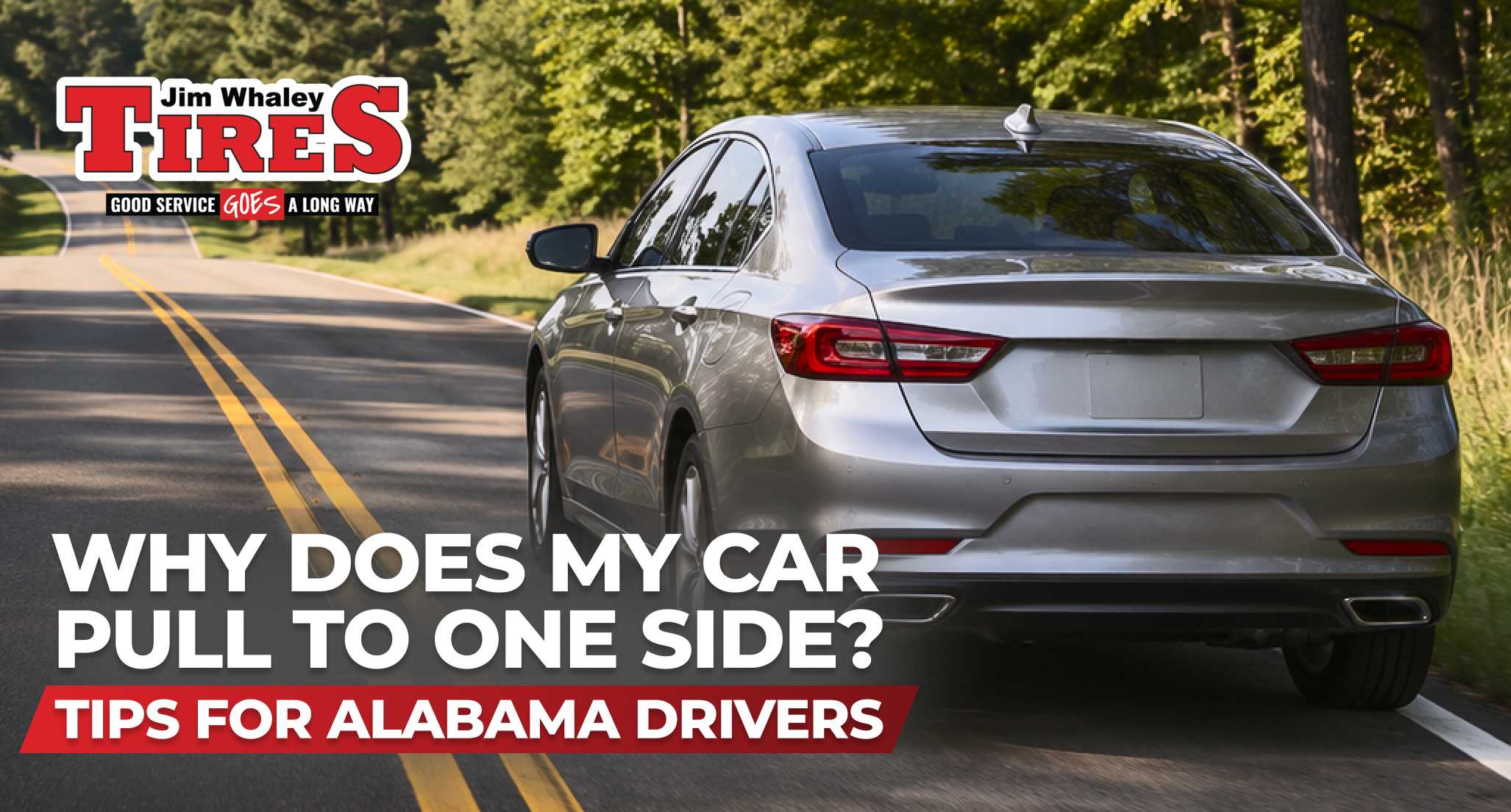
You are driving down a straight Alabama road when you notice the steering wheel needs constant correction. You loosen your grip for a moment and the vehicle starts drifting toward one side. So, why does my car pull to one side?
Sometimes the answer is as simple as low tire pressure. Other times, the cause can be wheel alignment, tire wear, a sticking brake, or a worn steering or suspension component. Road slope can also make a properly functioning vehicle seem like it is pulling.
The important thing is not to assume that every pulling problem needs an alignment. The pattern of the pull can give you useful clues before you schedule service.
This guide explains what to check first, which symptoms deserve more attention, and when it makes sense to have your vehicle inspected by a professional.
TL;DR Why Does My Car Pull to One Side
- Check tire pressure first because even a small difference between tires can affect how the vehicle tracks.
- Look at the tires for uneven tread, damage, mismatched tires, or unusual wear patterns.
- Consider alignment if the vehicle consistently drifts or the steering wheel no longer sits straight.
- Pay attention when braking, because pulling during braking can indicate a brake problem rather than alignment.
- Do not ignore sudden or severe pulling after hitting a pothole, curb, or road debris because steering, suspension, wheel, or tire damage may be involved.
A mild drift on a crowned road can be normal. A persistent pull on different roads deserves attention, especially if it comes with vibration, unusual tire wear, noises, steering looseness, or changes in braking.
Why Does My Car Pull to One Side?
A vehicle tracks straight when its tires, steering, suspension, and braking system work together properly. When something changes that balance, the vehicle may begin to drift or pull to the left or right.
Common causes include:
- Unequal tire pressure – A tire with lower pressure can create more rolling resistance and cause the vehicle to drift toward that side. Check pressure when the tires are cold, and use the pressure listed on the driver’s door placard or in the owner’s manual.
- Wheel alignment problems – Incorrect toe, camber, or caster angles can change how the tires contact the road. Alignment can shift after pothole impacts, curb strikes, worn components, or suspension repairs.
- Tire wear or tire construction – Tires with different tread depths, patterns, or internal characteristics can affect vehicle tracking. A tire can sometimes create a pull even when its exterior looks normal.
- Brake drag – A sticking caliper or another brake problem can create uneven braking force. This becomes especially important if the pull becomes stronger when you press the brake pedal.
- Steering or suspension wear – Worn tie rods, ball joints, bushings, control arms, struts, or related components can affect how the wheels sit and respond to road forces.
- Road crown – Roads are commonly sloped slightly for drainage. That slope can cause a vehicle to drift toward the lower side even when nothing is wrong with it.
The timing matters. If the vehicle pulls continuously, start with the tires and alignment. If the pull appears mainly during braking, move the brakes higher on the list. If it began immediately after hitting a pothole, inspection for impact damage becomes more important.
How Tire Pressure Can Make a Car Pull
Before assuming you need a repair, check all four tire pressures. This is one of the quickest checks you can perform, and it can prevent you from chasing a more complicated problem.
Do not use the maximum pressure printed on the tire sidewall as your target. Instead, use the vehicle manufacturer’s recommended cold pressure.
If your car pulls to the right, compare the pressure of the right-side tires with the left. A noticeable difference can change rolling resistance and vehicle tracking.
The same applies if your car pulls to the left. A pressure difference between the two sides may be enough to create a noticeable drift, particularly at higher speeds.
A tire pressure gauge is useful even if your vehicle has a tire pressure monitoring system. The dashboard warning system is designed to alert you when pressure is outside an acceptable range, but manually checking the tires gives you a more precise comparison.
Keep in mind that temperature changes can also affect tire pressure. Alabama drivers may see pressure changes as weather shifts, so regular checks are worthwhile.
Correct pressure can also help reduce premature wear, improve handling, and support more consistent fuel economy.
HONEST SERVICE.
REAL SAVINGS.
CLAIM YOURS AND BOOK
AN APPOINTMENT
VIEW ALL COUPONS
What Tire Problems Can Cause a Pull?
Tires are the only parts of your vehicle that actually touch the road, so their condition directly affects steering and handling.
If pressure is correct but the vehicle still pulls, inspect the tires for visible problems. These are some of the most important things to look for:
- Uneven tire wear – Wear concentrated on one shoulder, cupping, feathering, or other irregular patterns can indicate an alignment, suspension, or inflation problem. The tire may continue affecting how the vehicle tracks even after the original problem is corrected.
- Different tread depths – A significantly more worn tire on one side can change how the vehicle responds to the road. This is particularly noticeable when tires have been replaced individually rather than as a matched set.
- Mismatched tires – Different tire models or significantly different tread designs can have different handling characteristics. Matching tires appropriately can help maintain predictable handling.
- Tire damage – Bulges, cuts, punctures, exposed cords, or other structural damage require attention. Damage can affect safety even if the vehicle still drives normally.
- Tire conicity – A tire can have an internal construction issue that causes it to behave as though it wants to travel in a particular direction. This is uncommon, but it can happen even with relatively new tires.
If you notice uneven tire wear, do not simply replace the tire and forget about it. The wear pattern may be telling you that an alignment or suspension issue caused the problem in the first place.
A professional inspection can distinguish a tire problem from an issue farther inside the vehicle.
What Are the Most Common Wheel Alignment Symptoms?
Pulling is one of the most recognizable alignment concerns, but it is not the only clue. Understanding common wheel alignment symptoms can help you spot a problem before tire damage becomes expensive.
Look for:
- Vehicle drifting consistently – If the car repeatedly moves toward the same side on a reasonably level road, alignment should be considered.
- Off-center steering wheel – If the vehicle travels straight but the steering wheel sits noticeably crooked, the steering and alignment angles may need to be checked.
- Uneven tire wear – Alignment problems can cause one portion of the tread to wear faster than the rest. Check the inside and outside edges rather than looking only at the center tread.
- Vehicle wandering – Excessive correction from the driver can indicate an alignment, steering, suspension, or tire issue.
- Recent pothole or curb impact – A hard impact can change alignment angles or damage a wheel, tire, or suspension component.
These wheel alignment symptoms can overlap with other problems, which is why a technician should measure the vehicle rather than diagnosing it based on the steering wheel alone.
Alignment is also not a substitute for repairing worn components. If a tie rod, ball joint, bushing, or other part is loose or damaged, that issue may need to be corrected before the vehicle can hold its alignment properly.
Could a Brake Problem Make My Car Pull?
Yes. If the vehicle travels normally until you apply the brakes, the braking system deserves particular attention.
A sticking brake caliper can cause one wheel to receive braking force when it should not. Uneven braking can make the vehicle pull during deceleration. You may also notice heat, an unusual smell, accelerated pad wear, or other changes around one wheel.
If your car pulls to the right primarily when braking, do not automatically book an alignment and assume that will solve it.
Likewise, if your car pulls to the left only when you brake, have the braking system inspected rather than treating it as an ordinary tire issue.
Brake-related pulling deserves prompt attention because braking is one of the most important safety systems on the vehicle. If the vehicle pulls sharply, braking performance changes, a warning light appears, or you smell burning from a wheel, stop somewhere safe and have the vehicle checked.
Is It Safe to Drive a Car That Pulls to One Side?
It depends on how severe the symptom is and what is causing it.
A very mild drift that occurs only on a crowned road may not indicate a vehicle fault. A strong, sudden, or worsening pull is different and should be taken seriously.
You should arrange an inspection promptly if:
- The vehicle pulls strongly in one direction.
- The pull appeared suddenly.
- The steering wheel became crooked after an impact.
- The vehicle pulls significantly while braking.
- You notice a burning smell or excessive heat near a wheel.
- A tire has visible damage or unusual wear.
- Steering feels loose or unstable.
- The vehicle vibrates, wanders, or becomes difficult to control.
Those are important wheel alignment symptoms, but they can also indicate tire, brake, steering, or suspension problems.
Do not wait for a tire to fail before addressing a handling change. A predictable vehicle gives you more control when traffic, weather, or an unexpected obstacle demands a quick response.
How to Diagnose a Car That Pulls to One Side
You do not need to guess at the repair. Start with the simplest checks and move toward a professional inspection if the problem remains.
- Check all four tire pressures – Use the manufacturer’s recommended cold pressure and compare the readings side to side.
- Inspect the tread – Look for uneven tire wear, exposed cords, cuts, bulges, or other abnormalities. Do not continue driving on a visibly damaged tire.
- Think about when it happens – Does the vehicle pull while cruising, accelerating, braking, or only on certain roads? That detail can help narrow the possibilities.
- Consider recent impacts – Remember any pothole, curb strike, collision, or recent suspension or tire work.
- Have the alignment measured – If the basic checks do not explain the problem, a technician can measure alignment angles and inspect the related components.
- Check brakes and suspension – If alignment readings do not explain the symptom, the next step may be examining brake operation, steering components, suspension parts, and tire construction.
This approach matters because replacing a part based on a guess can leave the original problem unresolved. A good diagnosis identifies the actual cause of the vehicle pulling before recommending a repair.
Get Your Vehicle Tracking Straight with Jim Whaley Tires
If your vehicle continues to pull after you check the tire pressure, schedule an inspection with Jim Whaley Tires. The team can evaluate your tires, alignment, brakes, steering, and suspension to determine what is affecting your vehicle’s handling.
Enterprise drivers can visit Jim Whaley Tires at 536 Boll Weevil Cir or the Geneva Hwy location. Drivers in Dothan, Troy, Eufaula, Ozark, and surrounding Alabama communities can also choose from nearby Jim Whaley locations.
Schedule your appointment online at https://jimwhaleytires.com/ and let a professional take a closer look before a pulling problem turns into a bigger tire or handling issue.