


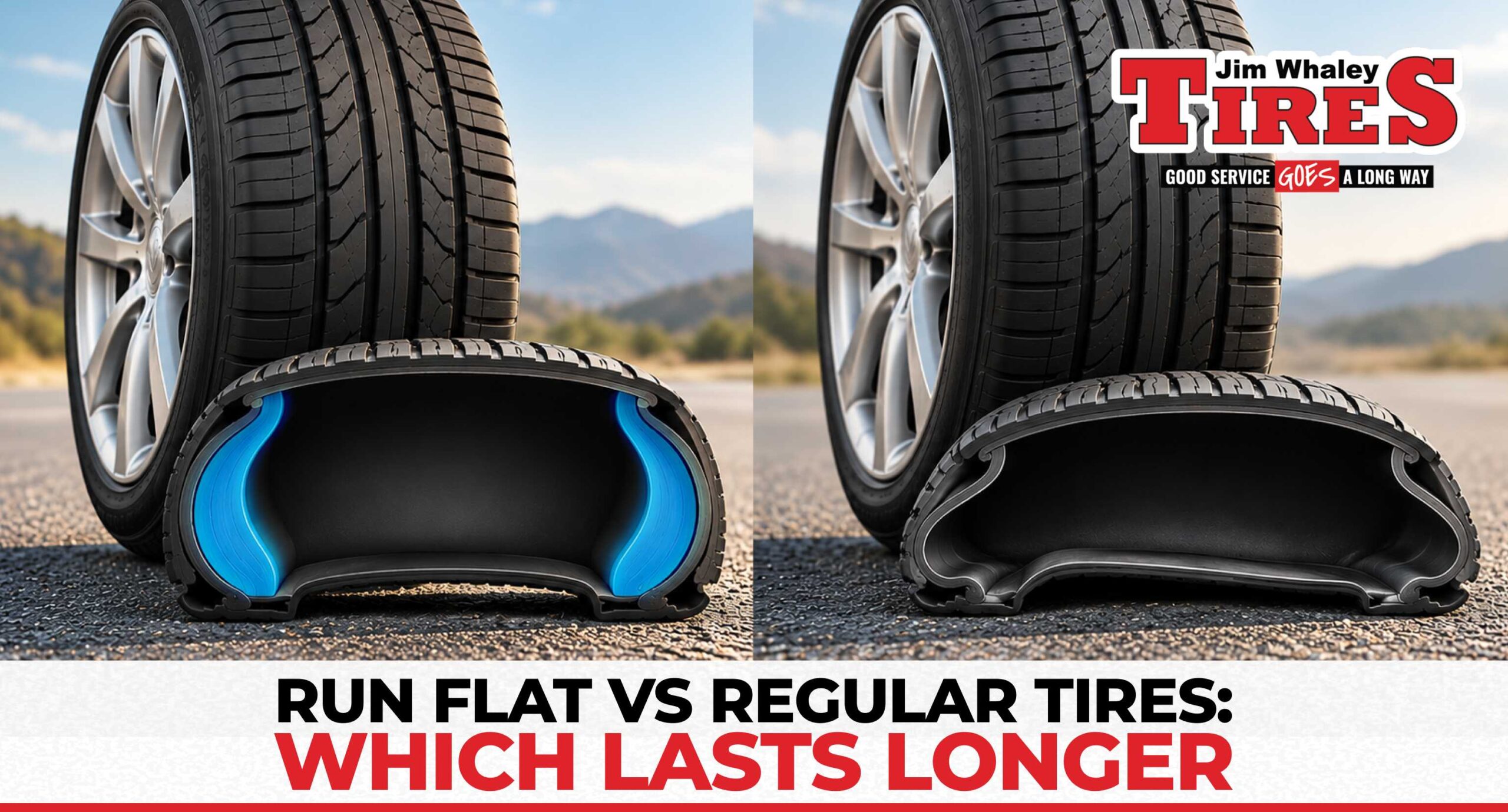
If you’re comparing run-flat vs. regular tires, lifespan is probably one of the first things you want to know. Run-flat tires offer a valuable safety feature because they can keep supporting a vehicle for a limited distance after a loss of air. Regular tires generally cost less and can offer a more comfortable ride, but a puncture usually means stopping to repair the tire or install a spare.
So which type lasts longer?
The honest answer is that neither type automatically lasts longer. Tire compound, driving habits, inflation pressure, alignment, road conditions, vehicle weight, and tire maintenance all affect how quickly the tread wears. Some sources report faster wear with run-flats, while other comparisons note that run-flat and conventional tires can have similar tread-wear lives when properly maintained.
If you’re shopping for tires for a car, SUV, or daily driver, this guide will help you compare the two types based on durability, cost, comfort, safety, and everyday use.
TL;DR – Run-Flat vs. Regular Tires Guide
- Run-flat tires can keep you moving after a puncture for a limited distance and speed, giving you time to reach a safe location.
- Regular tires can last just as long with proper inflation, rotation, alignment, and driving habits.
- Run-flats usually cost more because of their reinforced construction.
- Run-flats can provide a firmer ride due to their reinforced sidewalls.
- Your driving needs matter. Frequent highway and long-distance drivers may benefit more from run-flats.
How Long Do Run-Flat and Regular Tires Last
The run-flat tire lifespan depends on the specific tire, vehicle, road conditions, and maintenance. There is no universal mileage figure that applies to every run-flat tire.
The same applies to the regular tire lifespan. Two tires with the same size can wear at very different rates if one vehicle has poor alignment, incorrect inflation, heavy loads, or aggressive driving.
A tire that regularly carries the correct pressure and maintains even contact with the road will generally have a better chance of reaching its expected service life.
Here are the biggest factors that influence both tire types:
- Tire compound and construction – Softer compounds can provide better grip but may wear faster. Touring tires designed for long tread life can behave differently from performance tires, regardless of whether they use run-flat technology.
- Inflation pressure – Underinflation increases flexing and heat buildup and can accelerate wear. Michelin recommends checking tire pressure regularly, noting that underinflation can contribute to premature tire wear.
- Wheel alignment – Incorrect toe, camber, or other alignment angles can cause one part of the tread to wear faster than the rest.
- Driving style – Hard acceleration, sudden braking, fast cornering, and frequent aggressive starts can reduce tread life.
- Road conditions – Potholes, rough pavement, debris, and uneven roads can affect tire wear and internal construction.
- Vehicle load – Carrying heavy loads places additional stress on the tires and can change how the tread contacts the road.
For this reason, don’t choose a tire solely because someone claims it lasts a certain number of miles. Look at the tire’s specifications, your vehicle manufacturer’s recommendations, and how you actually drive.
A tire inspection can also reveal problems that a mileage estimate cannot. Uneven wear, cracks, bulges, vibration, or repeated pressure loss warrant attention before they require a larger repair.
Run Flat vs Regular Tires for Everyday Driving
When comparing run-flat vs. regular tires, the biggest difference isn’t necessarily how many miles the tread can cover. It is what happens when the tire loses pressure.
A regular tire depends on its air pressure to maintain its normal shape and support the vehicle. A run-flat tire uses reinforced construction to help maintain support after a loss of pressure.
That difference can matter considerably depending on where you drive.
- Run-flats provide temporary mobility – Many run-flat systems allow limited driving after a puncture. A common guideline is around 50 miles at no more than 50 mph, but the exact limit varies by tire and vehicle, so always follow the manufacturer’s instructions.
- Regular tires usually require immediate attention – A conventional tire with significant pressure loss should not be driven normally. Continuing to drive on it can damage the tire and wheel.
- Run-flats can reduce roadside exposure – Avoiding a tire change on a busy highway shoulder can be a meaningful safety advantage.
- Regular tires offer broader choices – Conventional tires are available in a wide range of tread patterns, price points, performance categories, and sizes.
- Vehicle compatibility matters – You should not assume that you can switch between tire types without checking the vehicle manufacturer’s requirements. Run-flat systems may depend on TPMS and other vehicle specifications.
For someone who spends most of the week driving around town, a regular tire may make practical sense. Someone who regularly travels long distances or drives alone at night may place a higher value on the temporary mobility provided by run-flats.
The best choice depends on the conditions you face most often, not simply the label on the tire.
Does a Run-Flat Tire Last Longer
The run-flat tire lifespan can be comparable to a conventional tire, but construction and driving conditions can influence the result.
Run-flat tires have reinforced sidewalls designed to support the vehicle after a loss of air pressure. That added structure can increase stiffness, weight, and sometimes rolling resistance. Some sources report faster wear with run-flats, while other guidance indicates that properly maintained run-flats can have tread lives similar to their conventional counterparts.
There is another important distinction. A run-flat tire may survive a puncture long enough to get you somewhere safe, but that does not mean the tire has escaped damage.
- Driving while deflated can cause internal damage – The reinforced structure can become damaged when the tire supports the vehicle without normal air pressure.
- A visual inspection may not tell the whole story – Internal damage may not be visible from the outside, which is why a run-flat that has operated with low or zero pressure should receive professional inspection.
- TPMS becomes especially important – Run-flats can maintain their shape after pressure loss, so drivers may not notice a flat tire by looking at it.
- Tire pressure still matters every day – Run-flat technology does not eliminate the need to maintain the manufacturer’s recommended cold tire pressure.
- Tread wear still determines replacement – Run-flat capability does not make a worn tire safe to keep using.
This is why the question “How long do run-flats last?” needs two answers. Their normal tread life depends on the same basic wear factors as other tires, while their ability to operate after pressure loss depends on the manufacturer’s specified limits.
HONEST SERVICE.
REAL SAVINGS.
CLAIM YOURS AND BOOK
AN APPOINTMENT
VIEW ALL COUPONS
Does a Regular Tire Last Longer
The regular tire lifespan can be longer, shorter, or similar to that of a run-flat depending on the tire model and how it is used.
A conventional tire has one major advantage when it comes to repairs. A puncture in the correct part of the tread may be repairable if the tire meets the applicable repair guidelines and has not suffered additional damage. Run-flat repairability can be more complicated because driving while deflated can cause internal damage.
Regular tires can also provide a softer ride because their sidewalls typically have greater flexibility than those of reinforced run-flat designs. Run-flat construction results in a measurable reduction in ride comfort, largely due to increased vertical stiffness.
For many drivers, that combination makes conventional tires appealing.
- Lower initial purchase price – Conventional tires generally cost less than comparable run-flat models.
- More replacement options – Drivers often have a larger selection of conventional tire brands, tread patterns, and price ranges.
- Potentially easier repairs – A qualifying tread puncture may be repairable, depending on the tire and manufacturer’s guidelines.
- Flexible ride characteristics – Conventional sidewalls can provide a softer feel over potholes and rough pavement.
- Easy maintenance routines – Regular pressure checks, rotations, alignment inspections, and tread inspections remain the foundation of long tire life.
That does not make regular tires automatically better. A conventional tire cannot replace the safety benefit of run-flat technology after a sudden pressure loss.
What Is the Run Flat Tire Cost
The run-flat tire cost is usually higher than that of an equivalent conventional tire.
Run-flat tires typically cost 20% to 40% more than comparable conventional tires, though prices vary by tire size, brand, vehicle, and market.
The purchase price is only one part of the calculation.
- Replacement price matters – Compare the complete installed cost rather than looking at the price of one tire online.
- Repair possibilities affect ownership cost – A qualifying puncture on a conventional tire may sometimes be repaired, while a run-flat that has been driven without adequate pressure may require replacement.
- A spare tire has value – Some vehicles designed around run-flats do not carry a conventional spare, which can save trunk space.
- Availability can affect convenience – Certain run-flat sizes and models may be less widely stocked than common conventional tires.
- Your driving habits affect value – A driver who frequently travels long distances may value puncture mobility enough to justify the added cost.
Think about the total ownership picture rather than simply asking which tire is cheaper at the counter.
A lower purchase price does not automatically mean lower overall cost, just as a higher-priced run-flat does not automatically deliver better value for every driver.
Which Tires Make Sense for Alabama and Florida Drivers
Drivers around Dothan, Enterprise, Troy, Eufaula, Ozark, and Marianna deal with a mix of city streets, highways, heat, rain, and long-distance travel.
That makes tire selection especially important. A tire that works well for a short daily commute may not be the same choice you’d want for frequent highway trips between communities.
For drivers in these areas, consider how you actually use your vehicle.
- Frequent highway driving – Run-flats may appeal to drivers who want temporary mobility after a puncture.
- Mostly local driving – A conventional tire may provide the comfort and price combination you prefer.
- Long trips – Think about where you would safely stop if you had a flat and whether your vehicle carries a spare.
- SUV and crossover use – Vehicle weight, tire size, load rating, and driving conditions should all factor into the decision.
- Hot and wet conditions – Maintaining proper pressure becomes particularly important because pressure and tire performance can change with temperature.
Jim Whaley can help drivers compare suitable tire options based on the vehicle and driving conditions rather than recommending the same tire to everyone.
If you’re near Dothan, Enterprise, Troy, Eufaula, Ozark, or Marianna, having your current tires inspected can also reveal whether your vehicle needs tires now or simply needs better maintenance.
Choosing the Right Tires With Jim Whaley
When comparing run-flat vs. regular tires, the longest-lasting option isn’t automatically the same for every driver. A well-maintained conventional tire can provide an excellent service life, while a run-flat tire can provide an important safety advantage when a puncture occurs.
The regular tire lifespan and run flat tire lifespan both depend heavily on maintenance, inflation, alignment, road conditions, and driving habits. The right choice should also consider your vehicle’s original equipment requirements, budget, comfort preferences, and travel frequency.
Jim Whaley helps local drivers make tire decisions based on their vehicle and the roads they drive on. Whether you’re in Dothan, Enterprise, Troy, Eufaula, Ozark, or Marianna, a professional tire inspection can help you determine what your vehicle needs before you spend money on a new set of tires.
If you’re unsure whether run-flats or regular tires make more sense for your vehicle, have your current tires inspected first. Jim Whaley can help you evaluate tread wear, pressure, alignment-related wear, and replacement needs so you can make a more informed decision. Schedule online at Jim Whaley Tires.